
Mere Exposure Effect
Repeated exposure can increase liking for some initially unfamiliar stimuli, but the effect depends on the stimulus, exposure pattern and point at which it is measured.
Public evidence overview
One checked source, with its limits.
This preview is not the complete evidence base. Use it as a question to investigate in your own product, not as a prediction of what an individual will do.
A re-examination of the mere exposure effect: The influence of repeated exposure on recognition, familiarity, and liking
Research-assisted source review
- What it supports
- The average relationship combined a positive slope with a negative quadratic term, consistent with an inverted-U. The pattern appeared for visual but not auditory stimuli and varied with duration and measurement timing.
- Where it may not transfer
- Curve estimates came from heterogeneous laboratory paradigms and do not specify an optimal frequency for products, advertising or notifications. Article-level reporting and available exposure ranges constrain the model, and liking is not equivalent to trust, choice or welfare.
See how sources and limitations are checked in our editorial method.
Member depth
Continue into the complete evidence and application.
Practitioner includes the complete checked source set, study context and practical takeaways for this ingredient. The public overview above remains available without upgrading.
Seen in real products
How teams put it to work.
Examples identified in our interface teardowns, linked back to the full product journey.
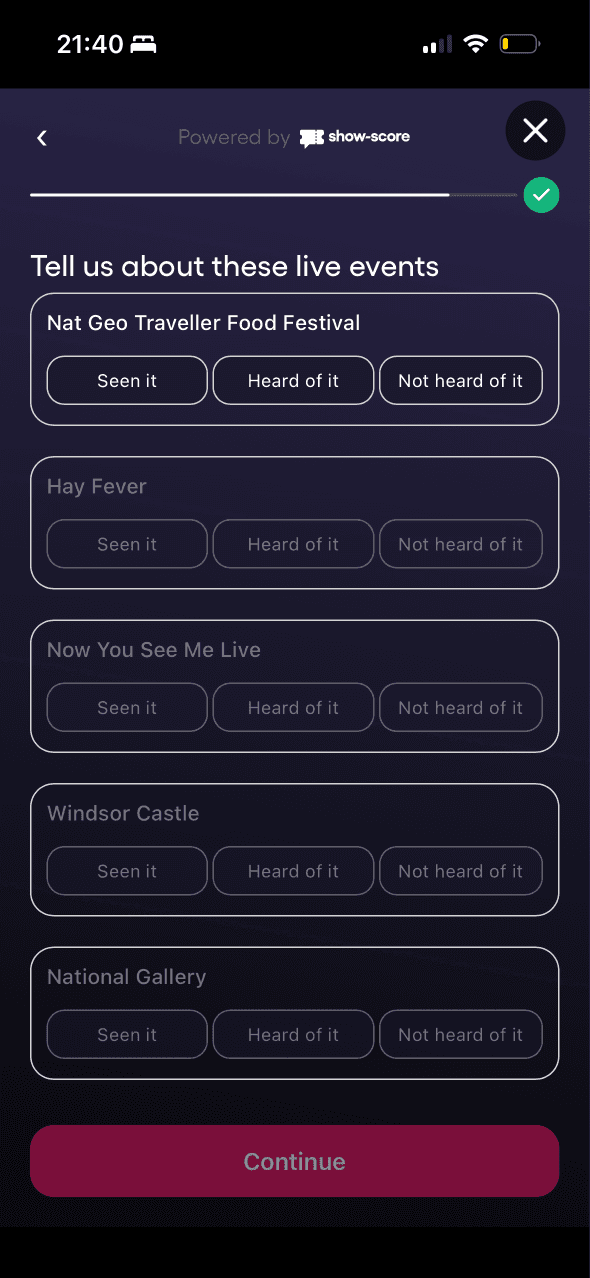
A sequence of event names creates repeated exposure within the survey, which can increase familiarity even when the stated task is only to report prior awareness.
View Ask for feedback without overreaching →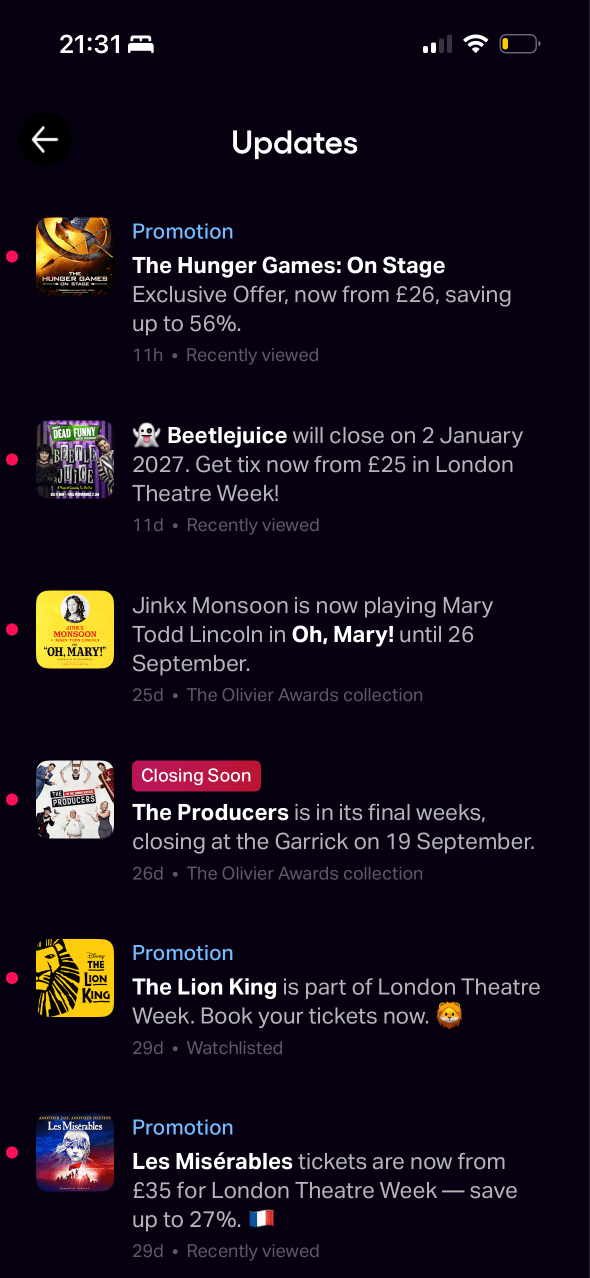
Recently viewed and watchlisted shows reappear throughout the feed, increasing their familiarity and prominence even when no new user need has been expressed.
View Bring people back without nagging →
The show appears again through a related collection, adding another familiar route back to the same content and potentially giving repetition more weight than relevance.
View Help people find the right show →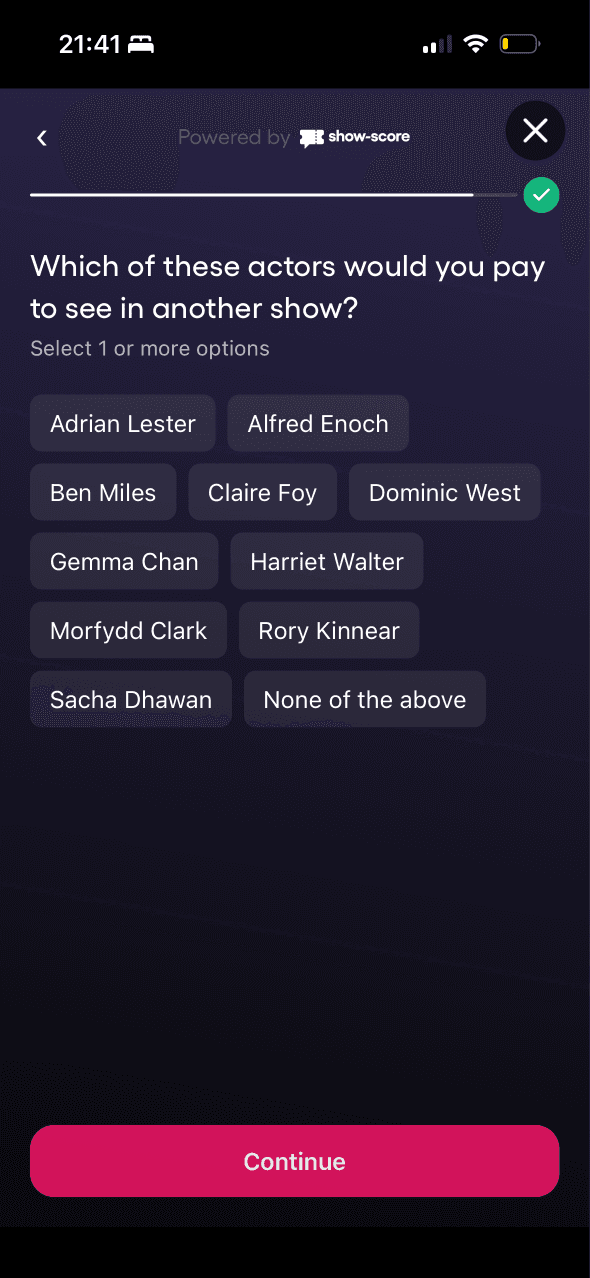
Showing a group of performer names adds another exposure to each person, which can build familiarity even when a respondent selects None of the above.
View Ask for feedback without overreaching →