
Anticipated Regret (Regret Aversion)
A person may consider how they would feel if a chosen outcome proved worse than a foregone alternative, but anticipated regret can favour action, inaction, risk or safety depending on feedback and context.
Public evidence overview
One checked source, with its limits.
This preview is not the complete evidence base. Use it as a question to investigate in your own product, not as a prediction of what an individual will do.
Decision Avoidance and Post-Decision Regret: A Systematic Review and Meta-Analysis
Research-assisted source review
- What it supports
- The overall regret reduction was small and non-significant (Hedges’ g=-0.23); status-quo preservation showed a reliable g=-0.45, while other strategies were unclear and prior negative experience moderated results.
- Where it may not transfer
- Few papers represented several strategies, the overall estimate may be subject to publication bias and heterogeneous designs measured post-decision regret at different times. Avoidance mechanisms were often inferred.
See how sources and limitations are checked in our editorial method.
Member depth
Continue into the complete evidence and application.
Practitioner includes the complete checked source set, study context and practical takeaways for this ingredient. The public overview above remains available without upgrading.
Seen in real products
How teams put it to work.
Examples identified in our interface teardowns, linked back to the full product journey.
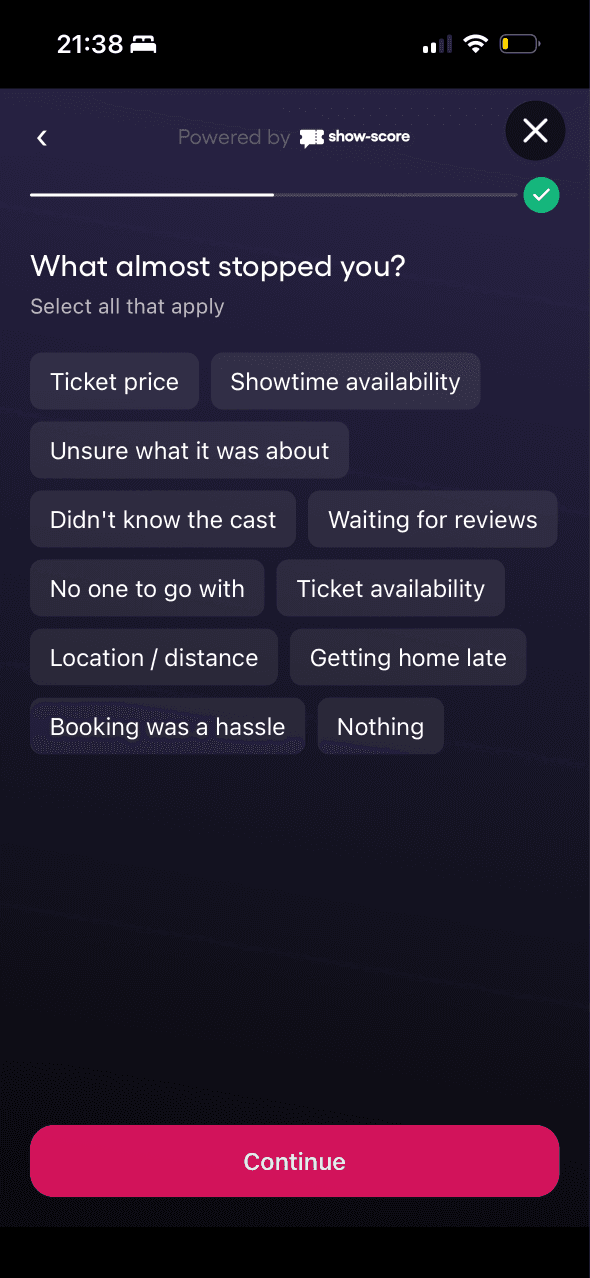
Options such as not knowing the cast, waiting for reviews and being unsure what it was about describe ways people may avoid a choice they could later regret.
View Ask for feedback without overreaching →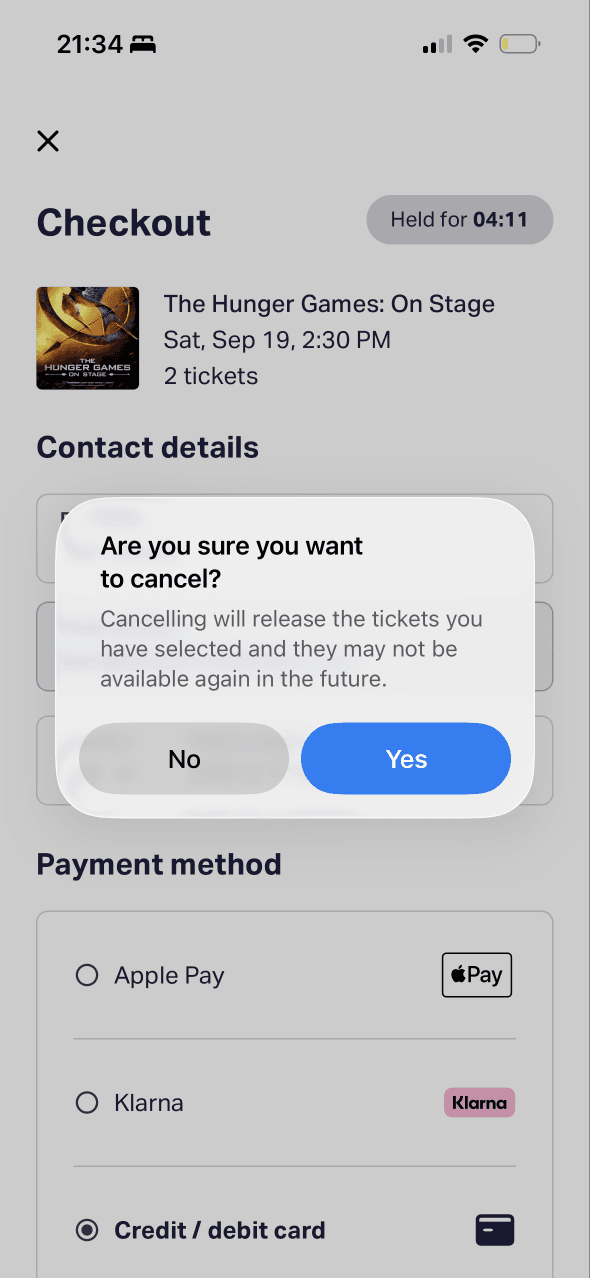
The dialog says cancelling will release the tickets and they may not be available again. That makes the possible future loss vivid at the point of exit.
View Make seat choice feel safe →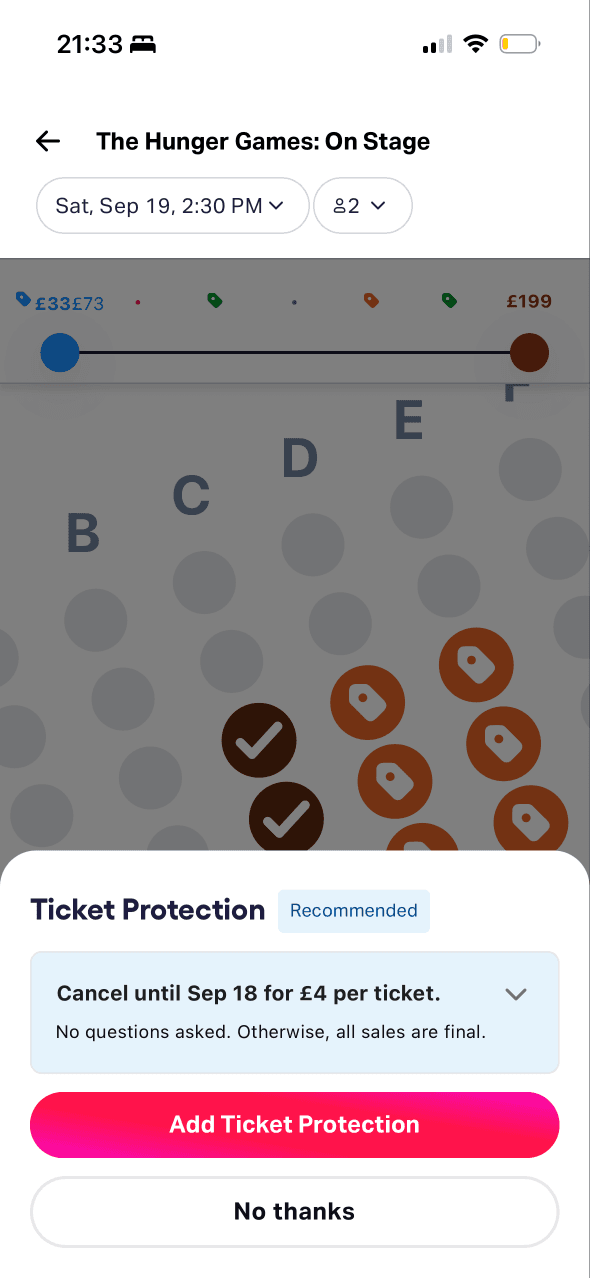
Protection is presented immediately after seat selection, when losing the purchase may be easy to imagine. The screenshot cannot show whether anticipated regret changes take-up.
View Make seat choice feel safe →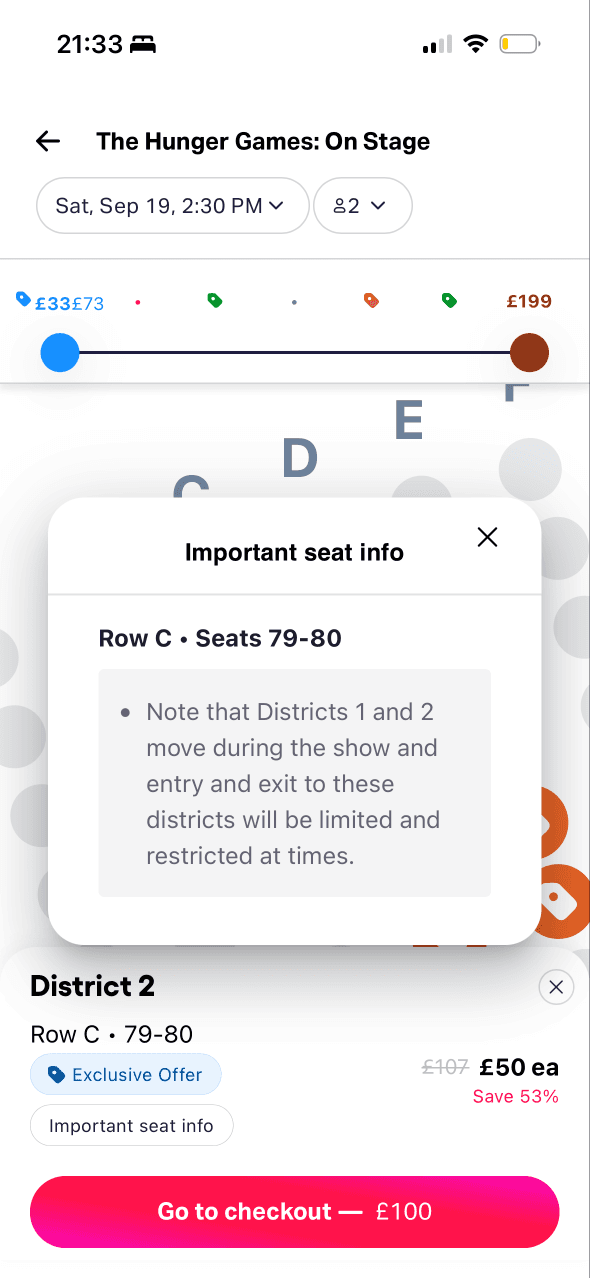
Showing movement and view limits before payment helps people consider a poor future experience while they can still change seats without financial consequence.
View Make seat choice feel safe →