
Authority Bias
Perceived legitimate expertise or institutional authority can receive more weight than the supporting reasons warrant.
Public evidence overview
One checked source, with its limits.
This preview is not the complete evidence base. Use it as a question to investigate in your own product, not as a prediction of what an individual will do.
Working Toward the Experimenter: Reconceptualizing Obedience Within the Milgram Paradigm as Identification-Based Followership
Research-assisted source review
- What it supports
- Willingness to continue varied predictably with conditions that made participants identify with the experimenter’s scientific goal, challenging an account of passive, automatic obedience.
- Where it may not transfer
- This is a reinterpretation of existing studies rather than a preregistered product experiment. It disputes one mechanism without showing that every act of obedience is identity-based or that interface authority cues have the same effect.
See how sources and limitations are checked in our editorial method.
Member depth
Continue into the complete evidence and application.
Practitioner includes the complete checked source set, study context and practical takeaways for this ingredient. The public overview above remains available without upgrading.
Seen in real products
How teams put it to work.
Examples identified in our interface teardowns, linked back to the full product journey.

“Science-backed meditation” and the 16% figure invoke scientific evidence as an authority cue. The screenshot gives no citation or limitations; the linked randomized trial reported increased positive affect in a self-selecting sample, not a universal 16% increase in happiness.
View Keep wellbeing and selling separate →
Find my level carries a prominent Recommended badge attributed to Duo. This is an authority cue; no expertise, method or evidence for the recommendation is provided, and the option is not preselected.
View Build momentum without pressure →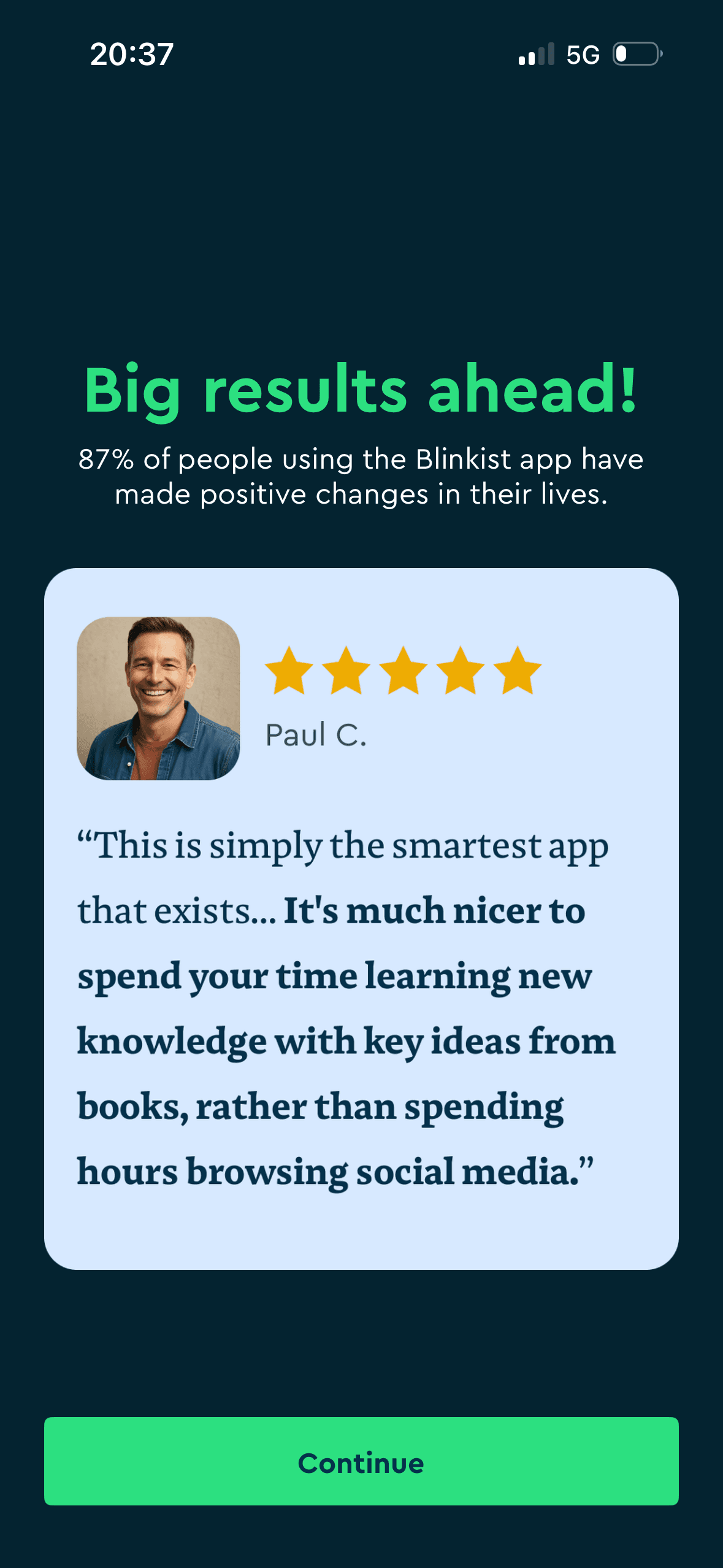
Quality-sounding labels can borrow authority from the platform that assigned them. The criteria and reviewer need to be available before the label is treated as proof.
View Personalise before asking for payment →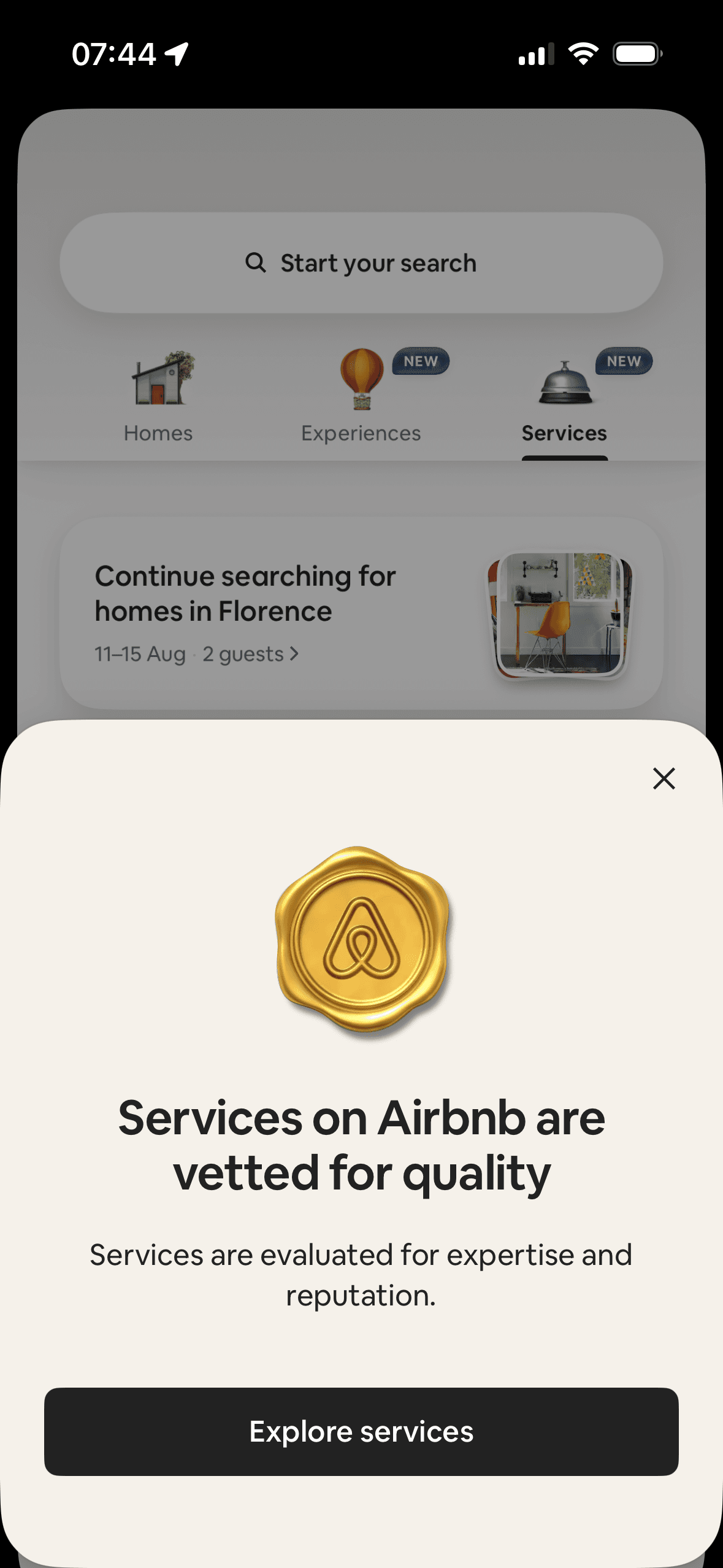
The Services introduction says listings are “vetted for quality” and evaluated for expertise and reputation. This is an explicit expertise signal; the screenshot does not provide criteria or show that it creates justified trust.
View Keep recommendations explainable →