
Foot-in-the-Door Technique
Agreement to a small request can slightly increase compliance with a later, larger related request.
Public evidence overview
One checked source, with its limits.
This preview is not the complete evidence base. Use it as a question to investigate in your own product, not as a prediction of what an individual will do.
The foot-in-the-door compliance procedure: A multiple-process analysis and review
Research-assisted source review
- What it supports
- Several processes could influence compliance in different foot-in-the-door situations. Their combined effects could account for successful demonstrations as well as studies in which the procedure was ineffective or decreased compliance.
- Where it may not transfer
- The review does not estimate one current effect for product onboarding and the underlying studies largely use social or charitable requests. Mechanism accounts overlap, and identifying conditions for compliance does not establish that using them is transparent, autonomous or in the recipient’s interest.
See how sources and limitations are checked in our editorial method.
Member depth
Continue into the complete evidence and application.
Practitioner includes the complete checked source set, study context and practical takeaways for this ingredient. The public overview above remains available without upgrading.
Seen in real products
How teams put it to work.
Examples identified in our interface teardowns, linked back to the full product journey.
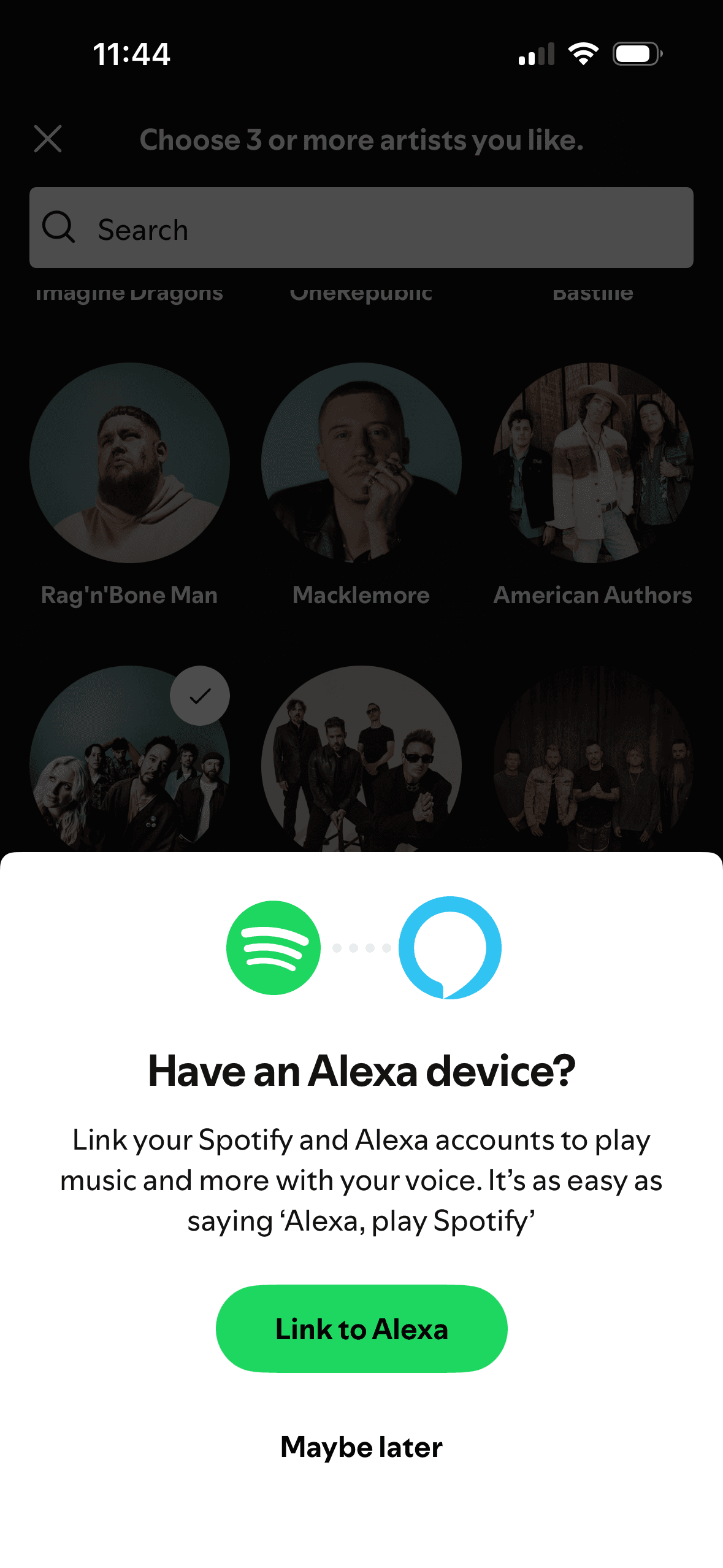
After music-preference setup, Spotify asks to link an external Alexa account. This is a new-scope request involving another service, so it needs a fresh informed decision. “Maybe later” provides a decline route; the screenshot does not show that earlier choices increased agreement.
View Show value before more setup →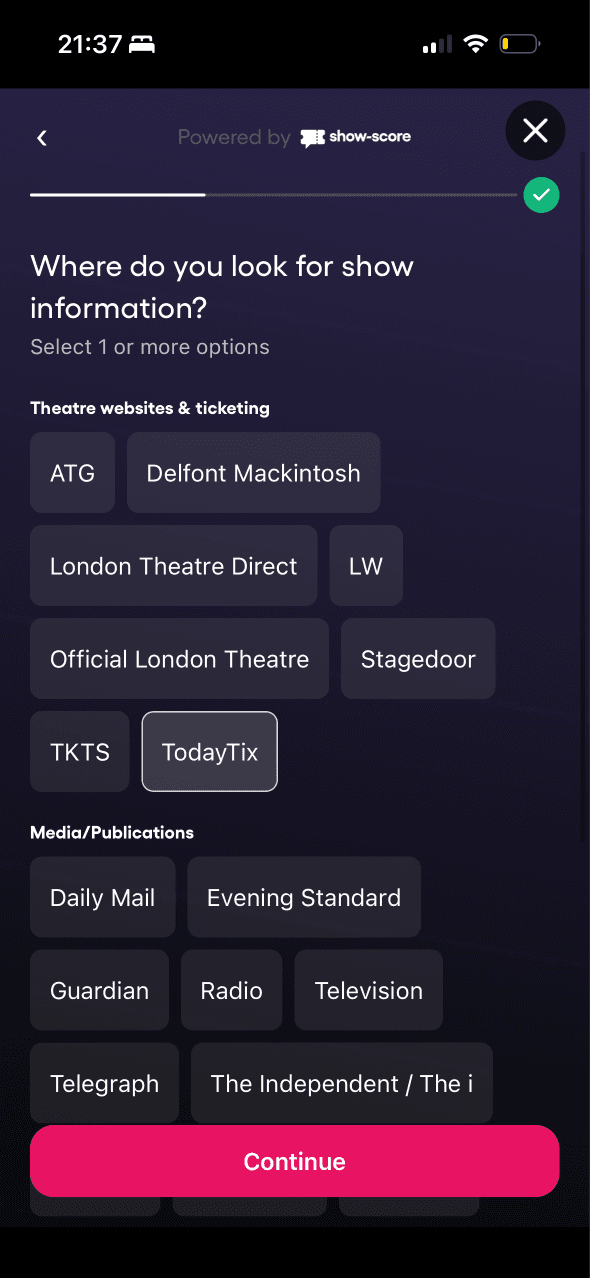
This question follows several easy review choices and expands the task into acquisition research, making the larger request arrive only after the respondent is already engaged.
View Ask for feedback without overreaching →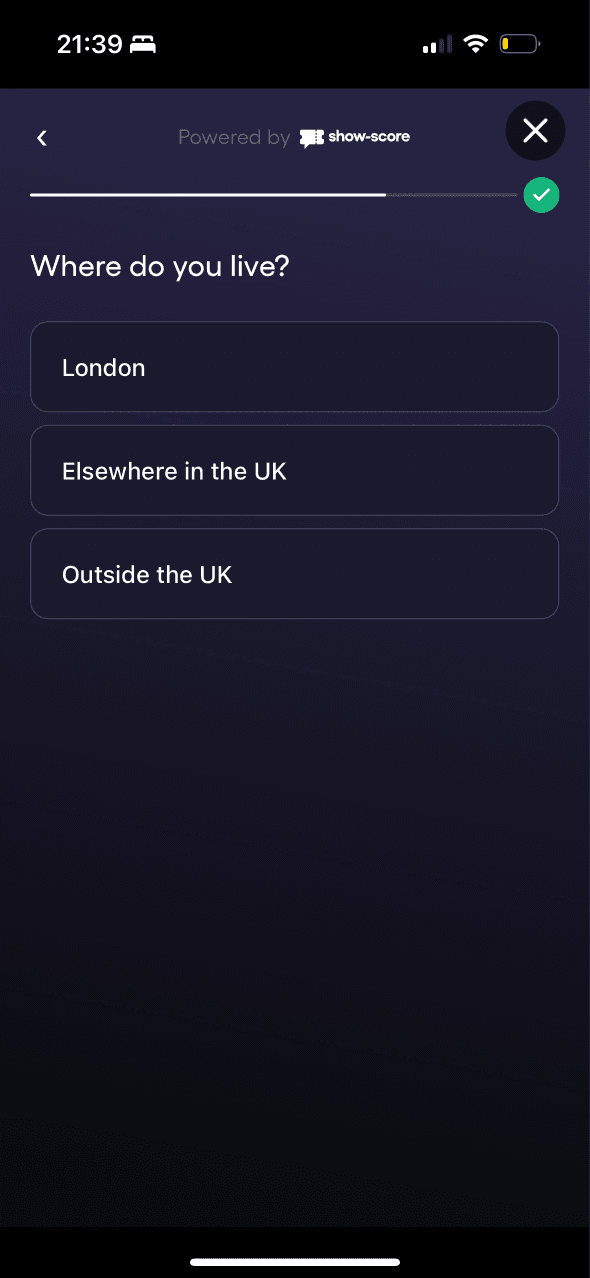
A personal location question arrives after a sequence of low-effort show questions. The gradual expansion is visible, but it does not prove that earlier answers cause later disclosure.
View Ask for feedback without overreaching →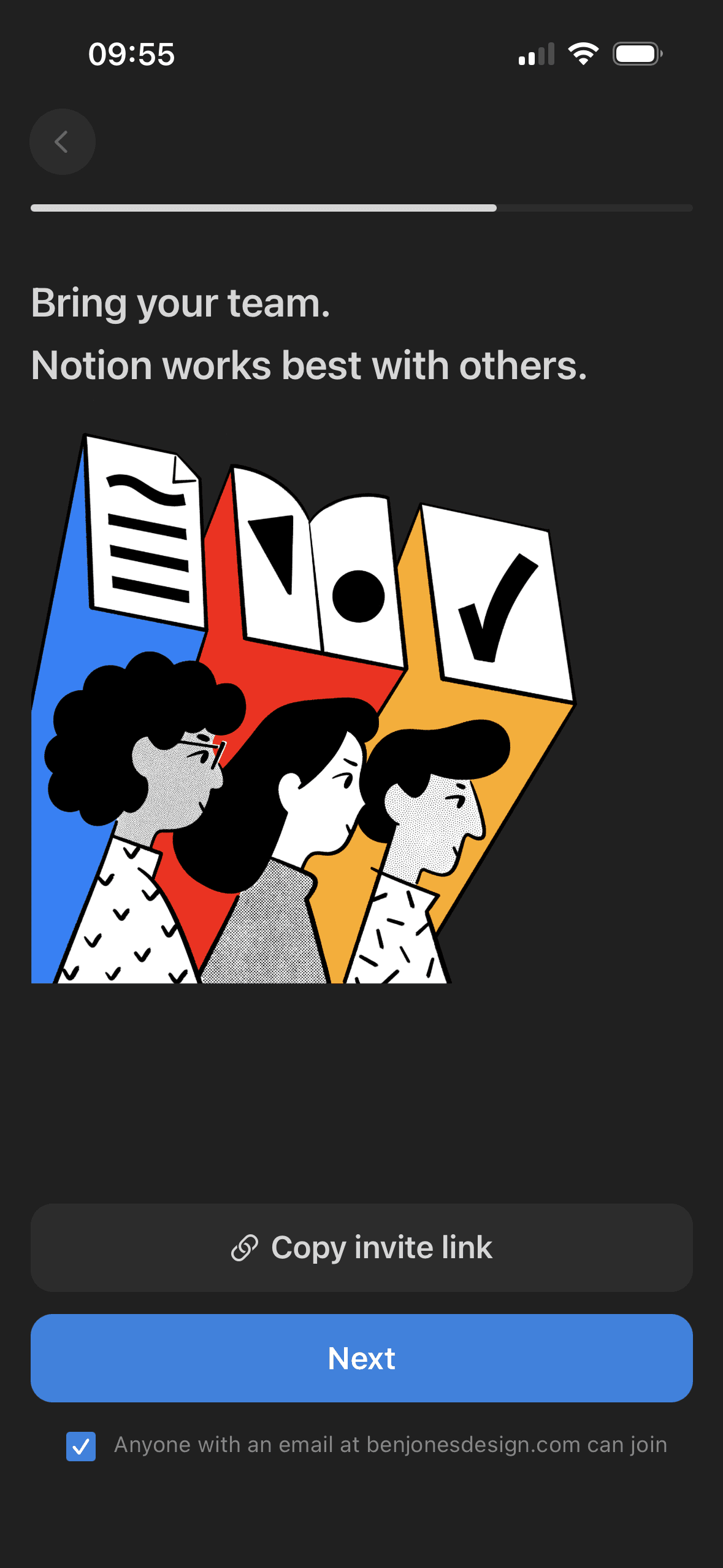
The social request arrives after earlier setup or progress, when continuing may feel easier than reconsidering a new permission. It should be introduced as a fresh optional decision.
View Ask only what onboarding needs →
After a completed lesson, Duolingo asks for profile creation and frames it as preventing loss of progress. This is an escalation from trial use to an account request; the close route remains visible, but earlier expectation-setting and neutral storage information are needed.
View Build momentum without pressure →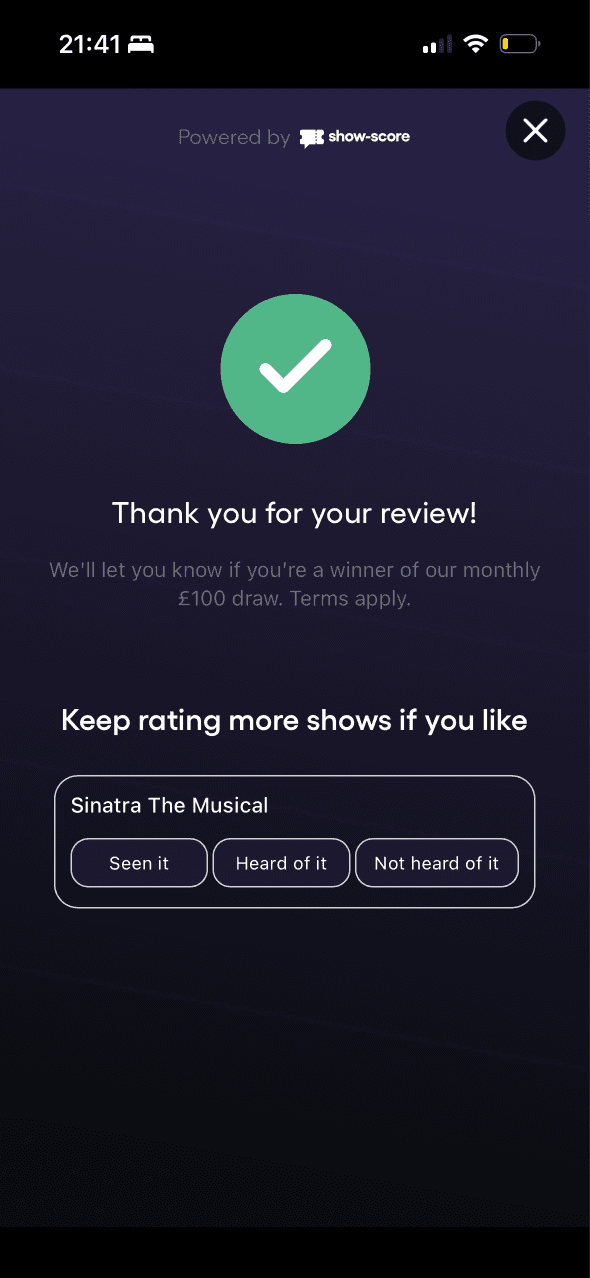
A request to rate another show follows immediately after completion. The sequence creates a smaller follow-on ask, although continued participation cannot be inferred from the image.
View Ask for feedback without overreaching →